US State
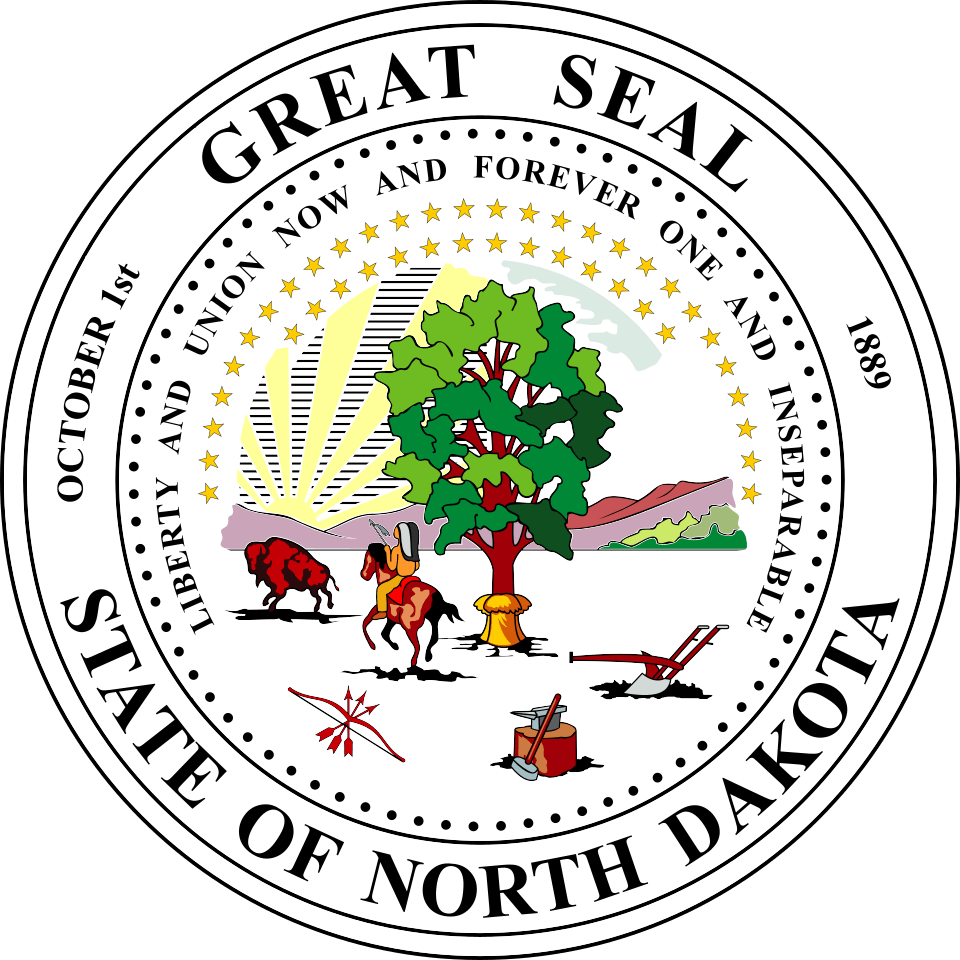
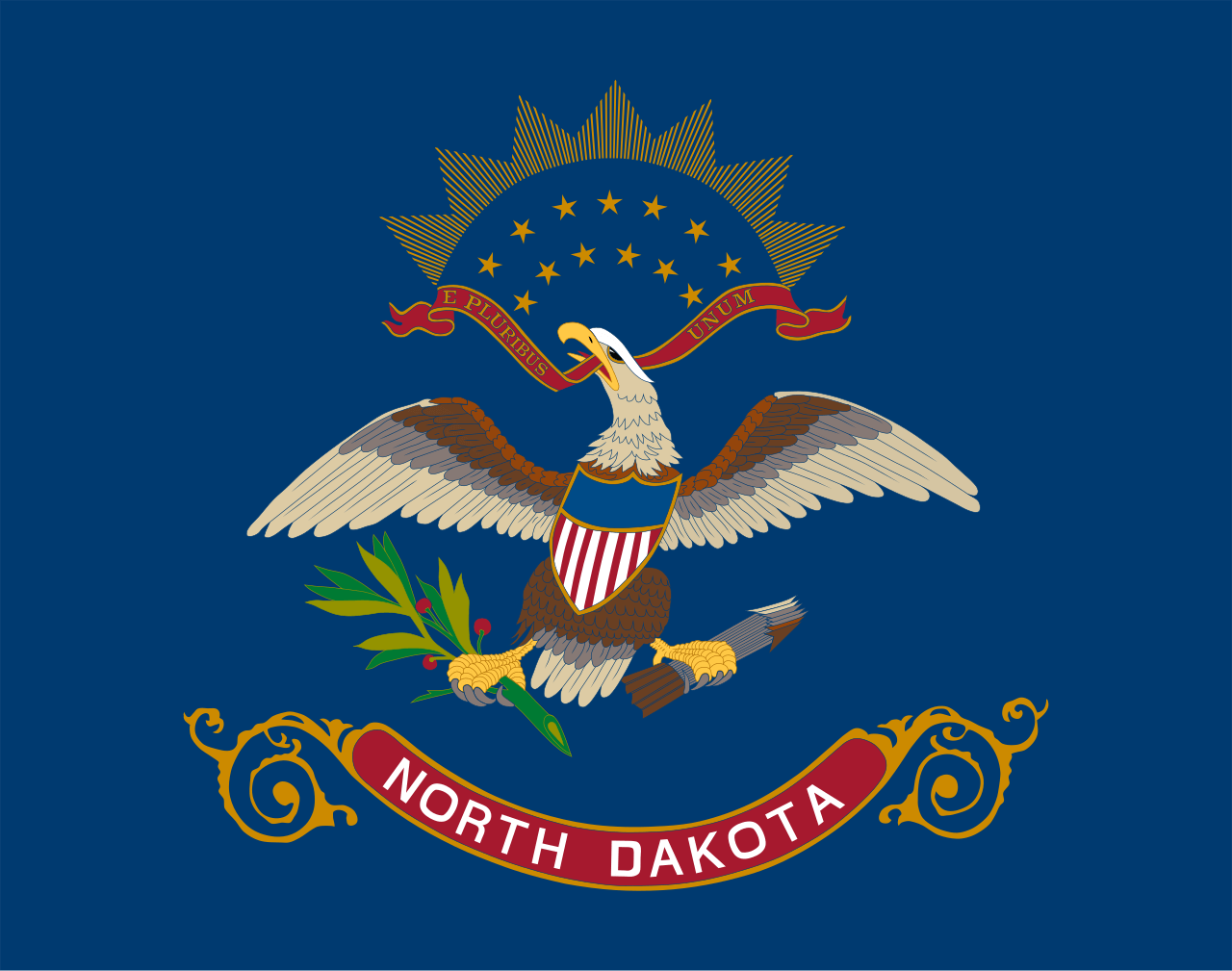
North Dakota’s state emblems connect the Great Plains frontier to the Philippine-American War. The Great Seal, adopted in the 1889 constitution, is a sweeping prairie tableau: an American elm surrounded by wheat bundles, a plow and anvil, a bow with arrows, and an Indian on horseback pursuing a buffalo toward the setting sun. 42 stars arc above — not 39, because the Omnibus Bill admitted four states in rapid succession — under the motto “Liberty and Union Now and Forever, One and Inseparable,” from Daniel Webster’s famous Senate speech. The flag, adopted on 11 March 1911, is the regimental banner of the First North Dakota Infantry from the Philippine War, with the unit name replaced by “North Dakota.”
Flag
Not available
Seal
Not available
| State | North Dakota (39th state, admitted 2 November 1889) |
|---|---|
| State seal | Elm tree, wheat, plow, anvil, bow/arrows, Indian on horseback, buffalo |
| Seal adopted | 1889 constitution; redesigned 1987 by Lili Stewart-Wheeler |
| State flag | Blue field with bald eagle, shield, 13 stars, North Dakota scroll |
| Flag adopted | 11 March 1911 (based on Philippine War regimental banner) |
| Motto | “Liberty and Union Now and Forever, One and Inseparable” |
| Capital | Bismarck |
| Nickname | The Peace Garden State |
| State flower | Wild prairie rose (Rosa arkansana) |
| 42 stars | Omnibus Bill admitted ND, SD, MT, WA — total 42 by November 1889 |
Flag of North Dakota — Philippine War regimental banner, adopted 1911
Like several other states, North Dakota’s flag originated as a military regimental banner — in this case from the Philippine-American War.
The First North Dakota Infantry Regiment carried a banner with a bald eagle on a blue field during the Philippine-American War (1899–1902). The design closely resembled the arms of the United States.
Colonel John H. Fraine, who had commanded North Dakotan troops during the war, introduced House Bill No. 152 on 21 January 1911, proposing that the regimental flag be adopted as the state flag with the unit designation replaced by “North Dakota.” It was approved on 11 March 1911.
A blue field bears a bald eagle with outspread wings, holding an olive branch and a bundle of arrows. A shield with 13 stripes covers the eagle’s breast. Above, 13 stars in a fan shape represent the original colonies. A scroll below reads “North Dakota.” The flag is bordered by knotted yellow fringe.
Great Seal of North Dakota — Liberty and Union — since 1889
The North Dakota seal is one of the most narrative of all US state seals — a panoramic scene of frontier life on the Great Plains.
An American elm stands in an open field, its trunk surrounded by three bundles of wheat. On the right: a plow, anvil, and sledge representing agriculture and industry. On the left: a bow crossed with three arrows, a Native American symbol. In the background, an Indian on horseback pursues a buffalo toward the setting sun. 42 stars arc above the tree.
North Dakota is the 39th state, but the seal has 42 stars because the Omnibus Bill of 1889 admitted four states — North Dakota, South Dakota, Montana, and Washington — in rapid succession, bringing the total to 42 by mid-November 1889.
“Liberty and Union Now and Forever, One and Inseparable” comes from Daniel Webster’s Reply to Hayne (1830), a famous Senate speech defending the permanence of the federal Union against the doctrine of nullification.
The seal is based on the 1863 territorial seal and was made official in the 1889 state constitution. In 1987, Dickinson artist Lili Stewart-Wheeler created the current design at the request of Secretary of State Ben Meier.
An elm tree with wheat, a plow and anvil, a bow with arrows, an Indian on horseback pursuing a buffalo, and 42 stars. Motto: “Liberty and Union Now and Forever, One and Inseparable.” Adopted 1889.
The Omnibus Bill admitted four states (ND, SD, MT, WA) in rapid succession in 1889, bringing the total to 42 — not just North Dakota’s individual rank of 39th.
Based on the First North Dakota Infantry regimental banner from the Philippine War. Colonel John H. Fraine introduced the bill; adopted 11 March 1911.
Blue field, bald eagle with olive branch and arrows, 13-stripe shield, 13 stars in fan above, “North Dakota” scroll below.
“Liberty and Union Now and Forever, One and Inseparable” — from Daniel Webster’s Reply to Hayne (1830).
Last reviewed by the Emblema Mundi editorial team on 2026-06-27.