US State
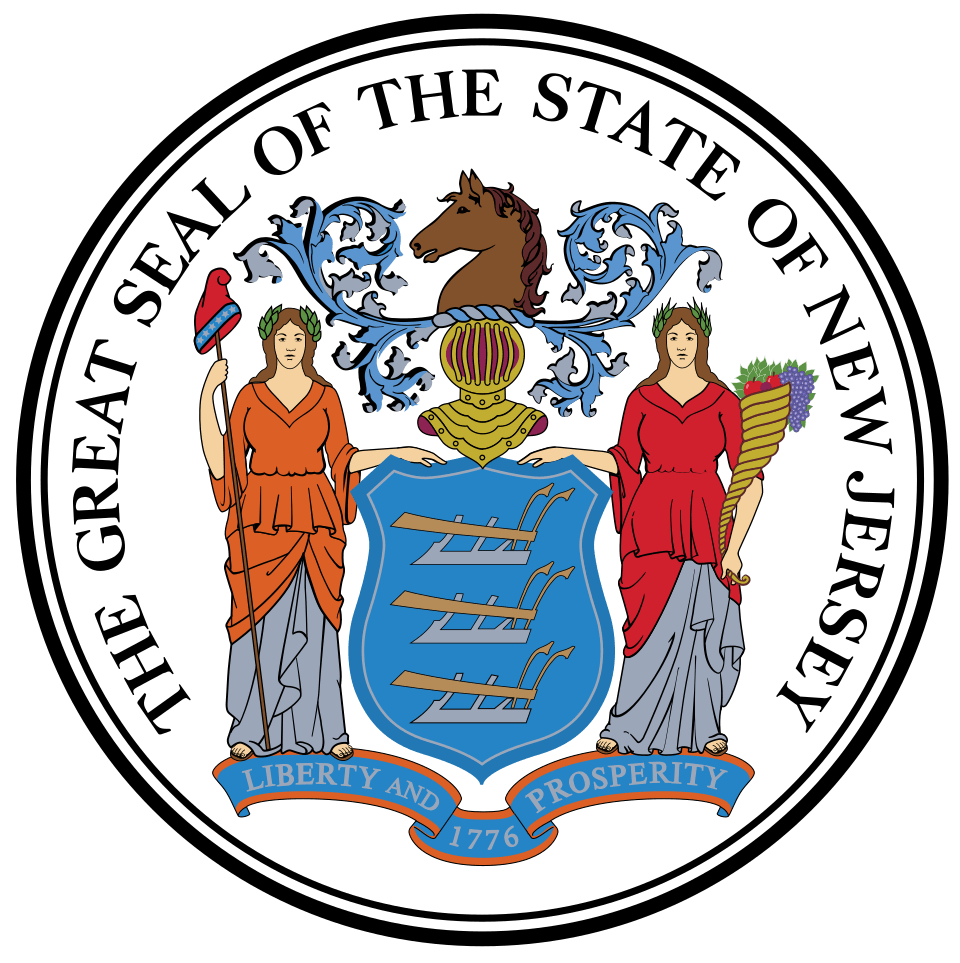
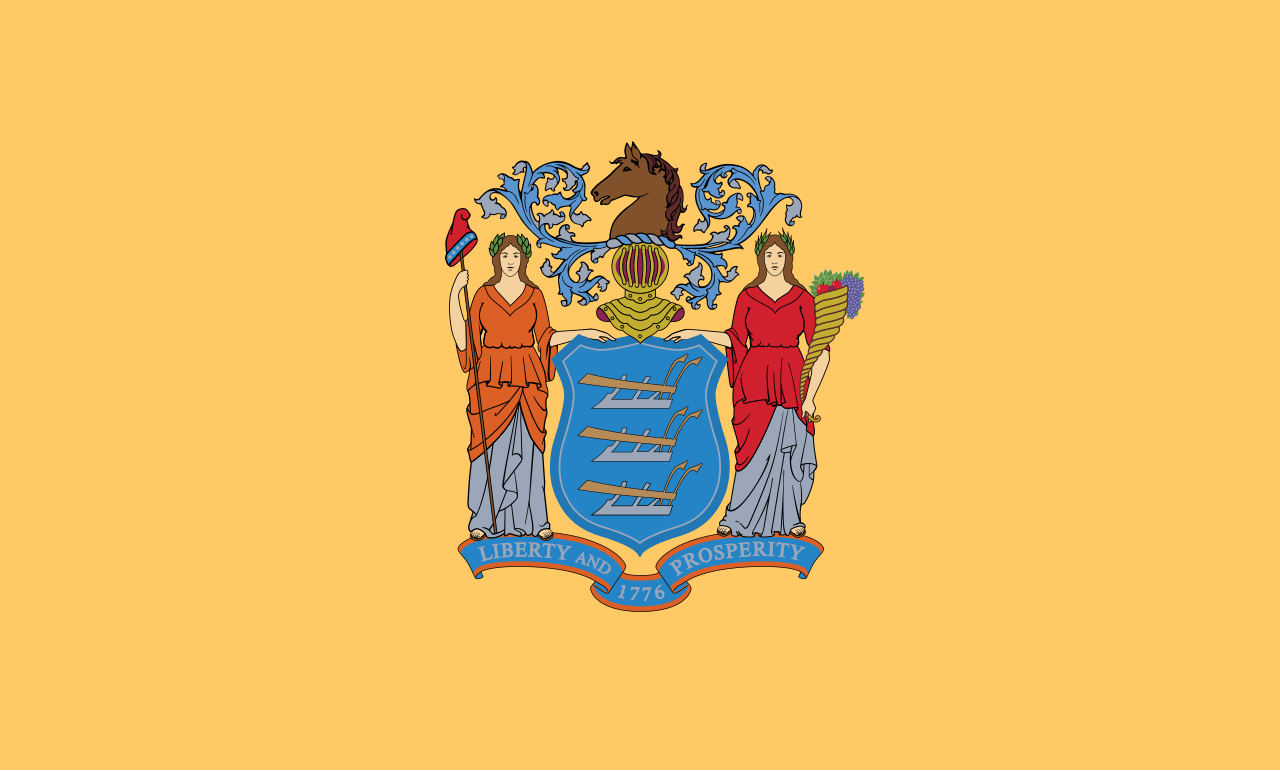
New Jersey’s state emblems are the work of a Swiss-born artist and carry the colors of George Washington’s army. The coat of arms, designed by Pierre Eugène du Simitière and adopted in 1777, features a shield with three plows flanked by Liberty (with her cap and staff) and Ceres (the Roman goddess of grain, with a cornucopia), topped by a horse’s head on a forward-facing helmet. The motto “Liberty and Prosperity” and the date 1776 appear below. The flag, adopted on 11 May 1896, places the coat of arms on a buff field — the unique golden-tan color that Washington ordered as the facing color for New Jersey’s Continental Line uniforms in 1779, honoring the state’s Dutch heritage.
Flag
Not available
Seal
Not available
| State | New Jersey (3rd state, ratified Constitution 18 December 1787) |
|---|---|
| Coat of arms | Shield with three plows, Liberty and Ceres, horse head crest |
| Arms designer | Pierre Eugène du Simitière (Geneva) |
| Arms adopted | 1777; modified 1928 |
| State flag | Buff field with coat of arms |
| Flag adopted | 11 May 1896; colors specified 1965 |
| Motto | “Liberty and Prosperity” |
| Capital | Trenton |
| Nickname | The Garden State |
| State flower | Common blue violet (Viola sororia) |
Flag of New Jersey — Coat of arms on buff, adopted 1896
The New Jersey flag is unique among US state flags for its distinctive buff-colored background — a direct link to George Washington and the Revolutionary War.
On 14 September 1779, General George Washington ordered that the uniform coats of the New Jersey Continental Line be dark (Jersey) blue with buff facings. The colors were chosen to honor the original Dutch settlers of New Jersey — dark blue and buff being the colors of the Netherlands.
The flag was adopted on 11 May 1896, featuring the state coat of arms centered on a buff field.
In 1965, the legislature defined the specific color shades of Jersey blue and buff by law, eliminating the variations that had appeared across reproductions.
Coat of Arms of New Jersey — Liberty and Prosperity — since 1777
The New Jersey coat of arms is one of the oldest in the nation, designed during the first year of American independence by a Swiss emigré who also contributed to the design of the Great Seal of the United States.
A shield bearing three plows represents New Jersey’s agricultural tradition. Liberty stands on the left, holding a liberty cap on a staff. Ceres, the Roman goddess of grain, stands on the right with a cornucopia filled with harvested produce. Above the shield, a horse’s head tops a forward-facing helmet — the forward-facing attitude signifying sovereignty. Below, a banner reads “Liberty and Prosperity” with the date 1776.
The arms were designed by Pierre Eugène du Simitière (born Pierre-Eugène Ducimetière in Geneva, Switzerland). After years in the West Indies, he settled in Philadelphia, where he also designed the seals of Delaware and Georgia and contributed to the committee that designed the Great Seal of the United States. He presented the New Jersey design to the Legislature at the Indian King Tavern in Haddonfield in May 1777.
The coat of arms was modified in 1928 to standardize its appearance after more than a century of artistic variation.
A shield with three plows, flanked by Liberty and Ceres. A horse’s head on a helmet serves as the crest. The motto “Liberty and Prosperity” and date 1776 appear below. Designed by Pierre Eugène du Simitière, adopted 1777.
The buff color honors George Washington, who ordered buff facings for the New Jersey Continental Line uniforms in 1779. The colors honored the state’s Dutch heritage (blue and buff = Netherlands).
Pierre Eugène du Simitière, a Swiss-born artist living in Philadelphia. He also designed the seals of Delaware and Georgia and contributed to the Great Seal of the United States.
The three plows honor New Jersey’s agricultural tradition. The state earned the nickname “The Garden State” for its fertile farmland.
Adopted 11 May 1896 with the coat of arms on a buff field. Color shades standardized by law in 1965.
Last reviewed by the Emblema Mundi editorial team on 2026-06-27.