US State
Connecticut’s state emblems are among the oldest in the nation, rooted in the Puritan settlements of the 1630s. The Great Seal traces its origins to the Saybrook Colony seal of 1639, brought from England by Colonel George Fenwick. Its central motif — three grapevines bearing fruit — represents the three oldest English towns in Connecticut: Hartford, Windsor, and Wethersfield. Below the vines, the Latin motto Qui Transtulit Sustinet (“He Who Transplanted Sustains”) invokes Psalm 80 and the belief that God would sustain the colonists transplanted to the New World. The flag, adopted in 1897 at the initiative of Governor Owen Vincent Coffin, places the coat of arms — a white baroque shield with the three grapevines — on a field of azure blue silk, with gold and silver embroidered borders.
Flag
Not available
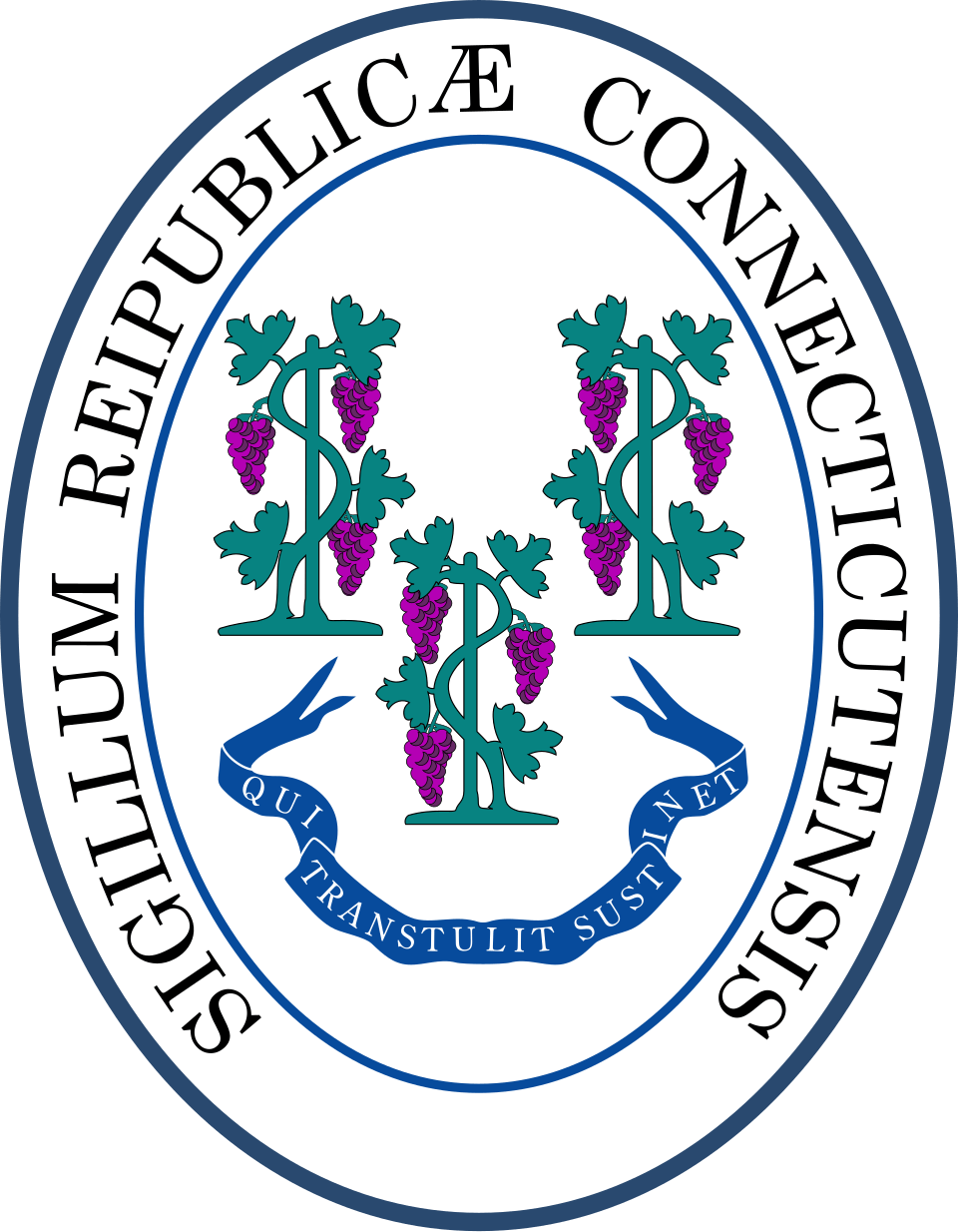
Seal
Not available
| State | Connecticut (5th state, ratified Constitution 9 January 1788) |
|---|---|
| State seal | Three grapevines on white shield, motto ribbon |
| Seal origins | Saybrook Colony seal, 1639; redesigned 1711; state seal May 1784 |
| State flag | Azure blue field, white baroque shield with grapevines |
| Flag adopted | 1897 |
| Flag designer | Abby Day Slocomb (DAR, Anna Warner Bailey Chapter) |
| Motto | Qui Transtulit Sustinet (“He Who Transplanted Sustains”) |
| Capital | Hartford |
| Nickname | The Constitution State |
| State flower | Mountain laurel (Kalmia latifolia) |
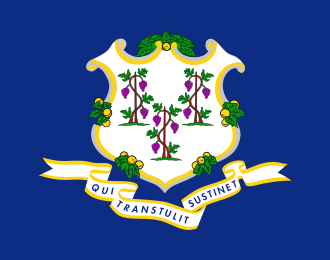
Flag of Connecticut — Baroque shield on azure blue, adopted 1897
The Connecticut flag places the state’s coat of arms — a white baroque shield with three grapevines — on a field of azure blue.
Governor Owen Vincent Coffin introduced the idea of an official state flag in 1895. Abby Day Slocomb, regent of the Anna Warner Bailey chapter of the Daughters of the American Revolution, submitted the design that was ultimately adopted by the General Assembly in 1897.
The flag is azure blue silk, five feet six inches in length and four feet four inches in width. At center, the white baroque shield bears three grapevines, each with three bunches of purple grapes. The shield’s border is embroidered in gold and silver. Below the shield, a gold ribbon bears the motto Qui Transtulit Sustinet in dark lettering.
The flag displays the coat of arms, not the full seal. The coat of arms is the shield, vines, and motto ribbon alone, while the full seal adds the circular border inscribed Sigillum Reipublicæ Connecticutensis.
Great Seal of Connecticut — Qui Transtulit Sustinet — since 1639
The Connecticut seal is one of the oldest continuously used state seals in America, with roots stretching back nearly four centuries.
The seal depicts three grapevines, each bearing three bunches of grapes, on a white shield. Below the shield, a ribbon bears the motto Qui Transtulit Sustinet. The border is inscribed Sigillum Reipublicæ Connecticutensis (“Seal of the State of Connecticut”).
The first seal was brought from England by Colonel George Fenwick in 1639 as the seal of the Saybrook Colony. When the Connecticut Colony purchased the land and fort at Saybrook Point in 1644, the seal was transferred. This original design featured 15 grapevines with the motto Sustinet Qui Transtulit.
In 1711, the colony commissioned a new seal that reduced the vines from 15 to three, representing the three oldest English settlements: Hartford, Windsor, and Wethersfield. The motto was reordered to Qui Transtulit Sustinet.
The vines and motto draw on Psalm 80, which describes God uprooting a vine and transplanting it. A 1775 letter explained the meaning: “God, who transplanted us hither, will support us.” The grapevines symbolize the Puritan colonists transplanted from England to the Connecticut wilderness.
The current state seal was formally adopted in May 1784, shortly after American independence, retaining the 1711 design.
The Great Seal depicts three grapevines, each bearing three bunches of grapes, on a white shield. Below, a ribbon bears the motto Qui Transtulit Sustinet (“He Who Transplanted Sustains”). The border reads Sigillum Reipublicæ Connecticutensis. The design traces back to the Saybrook Colony seal of 1639.
The three grapevines represent the three oldest English settlements in Connecticut: Hartford, Windsor, and Wethersfield. The original 1639 seal had 15 vines; in 1711, the number was reduced to three. The vines also symbolize the Puritan colony “transplanted” from England, as referenced in Psalm 80.
Qui Transtulit Sustinet is Latin for “He Who Transplanted Sustains.” A 1775 letter explained it: “God, who transplanted us hither, will support us.” It refers to the Puritan settlers likened to the vine in Psalm 80 that God uprooted and replanted.
The flag was adopted in 1897, after Governor Owen Vincent Coffin proposed it in 1895. Abby Day Slocomb of the Daughters of the American Revolution submitted the design: the coat of arms on azure blue silk with gold and silver borders.
The seal’s origins date to 1639, when Colonel George Fenwick brought it from England for the Saybrook Colony. Redesigned in 1711 and formally adopted as the state seal in May 1784, it is one of the oldest continuously used state seals in America.
Last reviewed by the Emblema Mundi editorial team on 2026-06-27.