US State
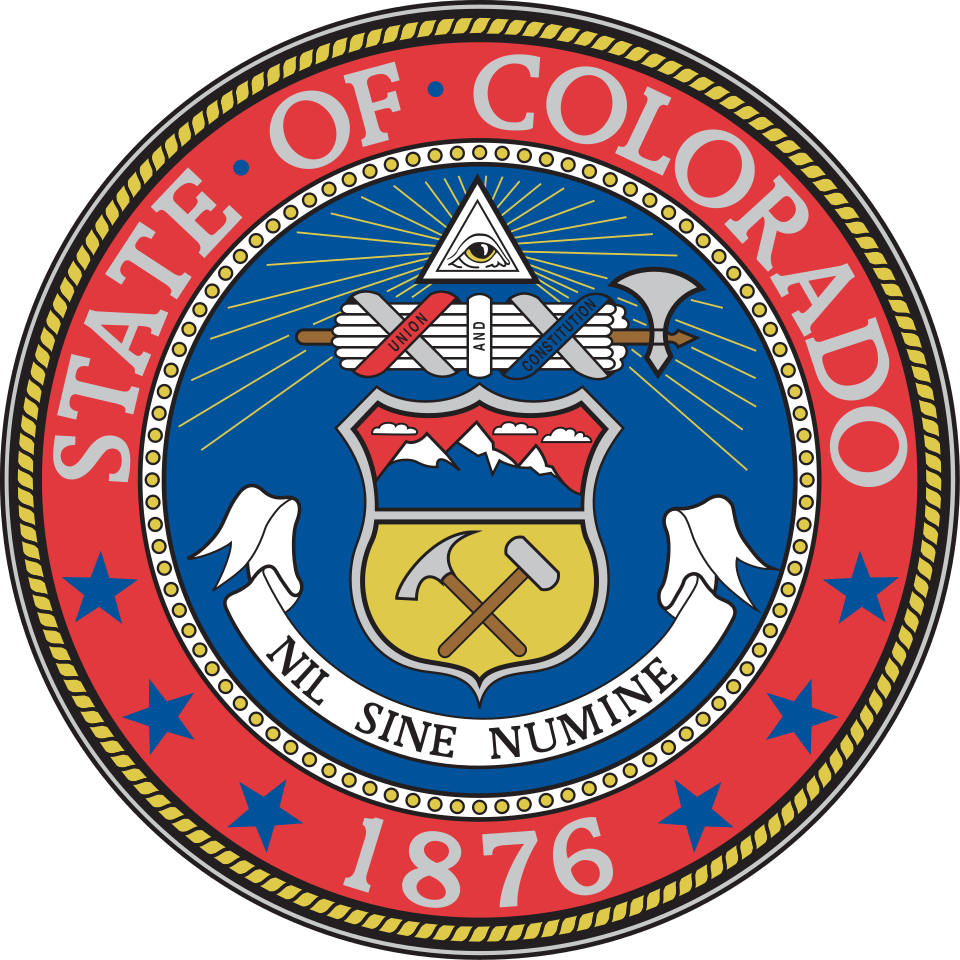
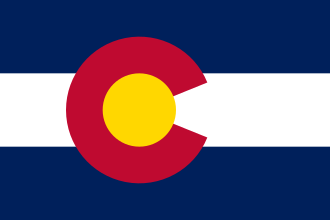
Colorado’s state emblems combine Masonic symbolism, mining heritage, and the colors of the Rocky Mountain landscape. The state seal, adapted from the 1861 territorial seal and adopted on 15 March 1877, features the Eye of Providence in a triangle, a Roman fasces inscribed Union and Constitution, and a heraldic shield with snowcapped mountains and a miner’s pickaxe and hammer, all under the Latin motto Nil Sine Numine (“Nothing Without Providence”), adapted from Virgil’s Aeneid. The flag, designed by Andrew Carlisle Johnson and adopted on 5 June 1911, is instantly recognizable: a bold red C filled with a golden disk over blue-white-blue stripes. The “C” stands for three things at once — Colorado (Spanish for “red”), Centennial (statehood in 1876), and Columbine (the state flower).
Flag
Not available
Seal
Not available
| State | Colorado (38th state, admitted 1 August 1876) |
|---|---|
| State seal | Eye of Providence, fasces, shield with mountains and miner’s tools |
| Seal adopted | 15 March 1877 (adapted from 1861 territorial seal) |
| State flag | Blue-white-blue stripes, red C with golden disk |
| Flag adopted | 5 June 1911; colors specified 1929; C size specified 1964 |
| Flag designer | Andrew Carlisle Johnson |
| Motto | Nil Sine Numine (“Nothing Without Providence”) |
| Capital | Denver |
| Nickname | The Centennial State |
| State flower | Rocky Mountain columbine (Aquilegia caerulea) |
Flag of Colorado — Red C and golden disk, adopted 1911
The Colorado flag is one of the most popular and widely recognized state flags in the United States — a bold red C filled with a golden disk over three horizontal stripes of blue, white, and blue.
Three horizontal stripes of equal width: the top and bottom stripes are blue and the middle stripe is white. A circular red “C”, positioned one-fifth of the flag’s length from the staff, is filled with a golden disk.
The flag was designed by Andrew Carlisle Johnson and adopted on 5 June 1911. The original legislation did not specify the precise shades of red and blue, leading to inconsistencies across reproductions. On 28 February 1929, the General Assembly standardized the colors to match the national flag. A further revision on 31 March 1964 specified the exact size and position of the letter C.
Great Seal of Colorado — Nil Sine Numine — since 1877
The Colorado seal is one of the most symbolically layered in the nation, combining classical republican imagery with references to the state’s mining economy and mountain landscape.
At the top, the Eye of Providence (or “All-Seeing Eye”) sits within a triangle, with golden rays radiating on two sides. Below it, a Roman fasces — a bundle of birch or elm rods with a battle axe, bound with a red, white, and blue ribbon inscribed “Union and Constitution”. The central heraldic shield is divided: the upper portion shows three snowcapped mountains surrounded by clouds, and the lower part bears a miner’s badge with a pickaxe and hammer. The motto Nil Sine Numine appears on a banner below.
The territorial seal was adopted by the First Territorial Assembly on 6 November 1861. When Colorado became the 38th state on 1 August 1876, the only changes were substituting “State of Colorado” and the date “1876” for the corresponding territorial inscriptions. The first General Assembly approved the state seal on 15 March 1877.
Nil Sine Numine is commonly translated as “Nothing Without Providence,” though the original committee’s translation was “Nothing Without the Deity.” The phrase is adapted from Virgil’s Aeneid (Book II, line 777): “non haec sine numine devûm eveniunt” (“these things do not happen without the will of the gods”).
The seal features the Eye of Providence in a triangle with golden rays, a Roman fasces bound with a red, white, and blue ribbon inscribed “Union and Constitution,” and a heraldic shield showing snowcapped mountains above and a miner’s pickaxe and hammer below. The motto Nil Sine Numine (“Nothing Without Providence”) appears on a banner. It was adapted from the 1861 territorial seal and adopted on 15 March 1877.
The flag was designed by Andrew Carlisle Johnson and adopted on 5 June 1911. The colors were standardized in 1929 and the size of the C specified in 1964.
The red C stands for three things: “Colorado” (from the Spanish for “red,” referring to the state’s red earth), “Centennial” (Colorado became a state in 1876, the centennial of American independence), and “Columbine” (the state flower). The golden disk inside represents sunshine and gold mining.
Nil Sine Numine is Latin for “Nothing Without Providence” (or “Nothing Without the Deity”). The phrase is adapted from Virgil’s Aeneid. It has been the state motto since the territorial period, appearing on the seal since 1861.
The Eye of Providence within a triangle represents divine watchfulness over the state. It is a common symbol in American heraldry — also appearing on the reverse of the Great Seal of the United States and on the one-dollar bill — and reinforces the motto Nil Sine Numine.
Last reviewed by the Emblema Mundi editorial team on 2026-06-27.