Country
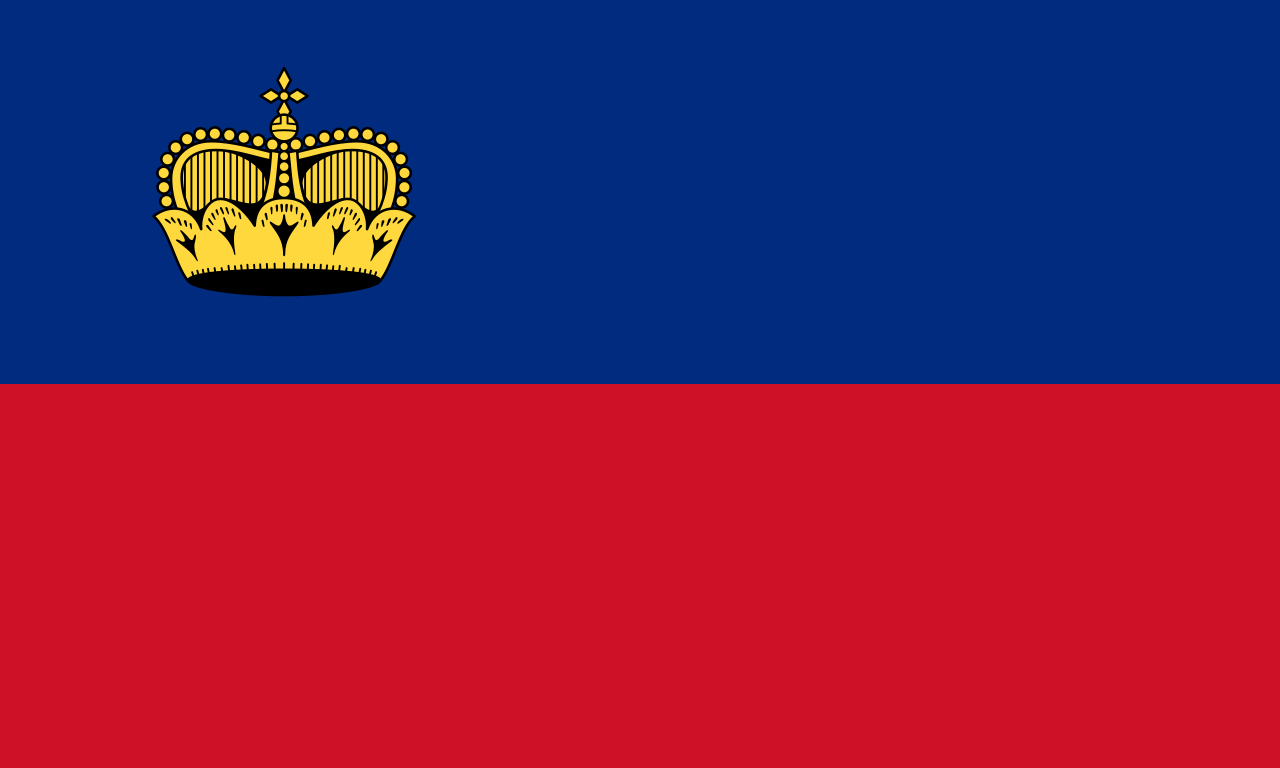
The national flag of the Principality of Liechtenstein consists of two horizontal bands, one blue and one red, charged with a gold crown in the canton. In use since 1764 and officially enshrined into the nation's constitution in 1921, it has been the flag of the principality since that year. The crown was added to the flag in 1937, after the country discovered at the Summer Olympics held the previous year that their flag was identical to the Haitian civil flag. A design with a modified crown was adopted on 30 June 1982.
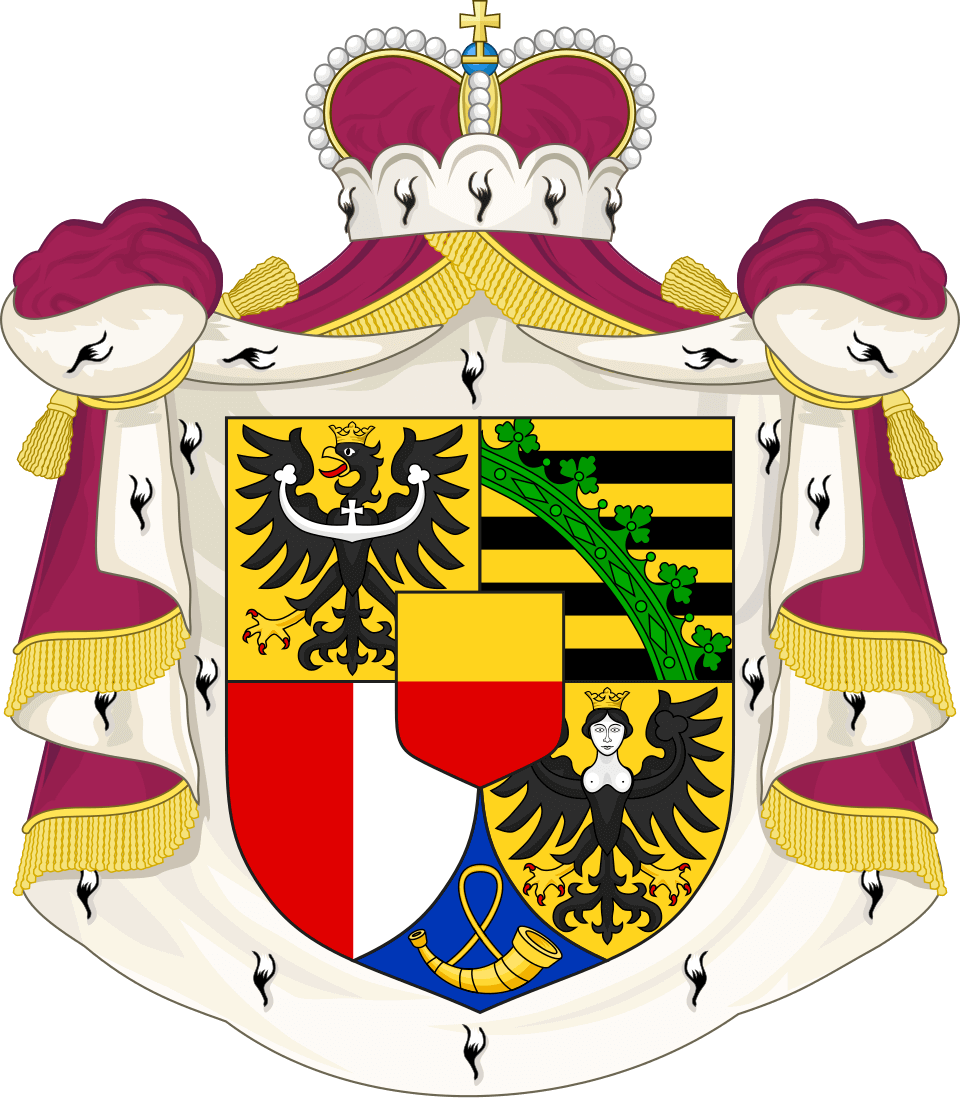
The coat of arms of Liechtenstein is the arms of dominion of the Prince of Liechtenstein, currently Hans-Adam II. As the sovereign emblem of the Prince, its use is restricted to the Prince and members of his House, though private individuals are permitted to use the arms if it is in the interest of the State. The arms are a history of the House of Liechtenstein and show some of the different territories and families with which it has been connected, either by acquisition or by marriage.
Beyond the national coat of arms, Liechtenstein is divided into regions and provinces, each carrying its own heraldic identity. Click on Liechtenstein on the interactive map to explore its administrative subdivisions and discover the coats of arms of each region, province, and territory.