Country
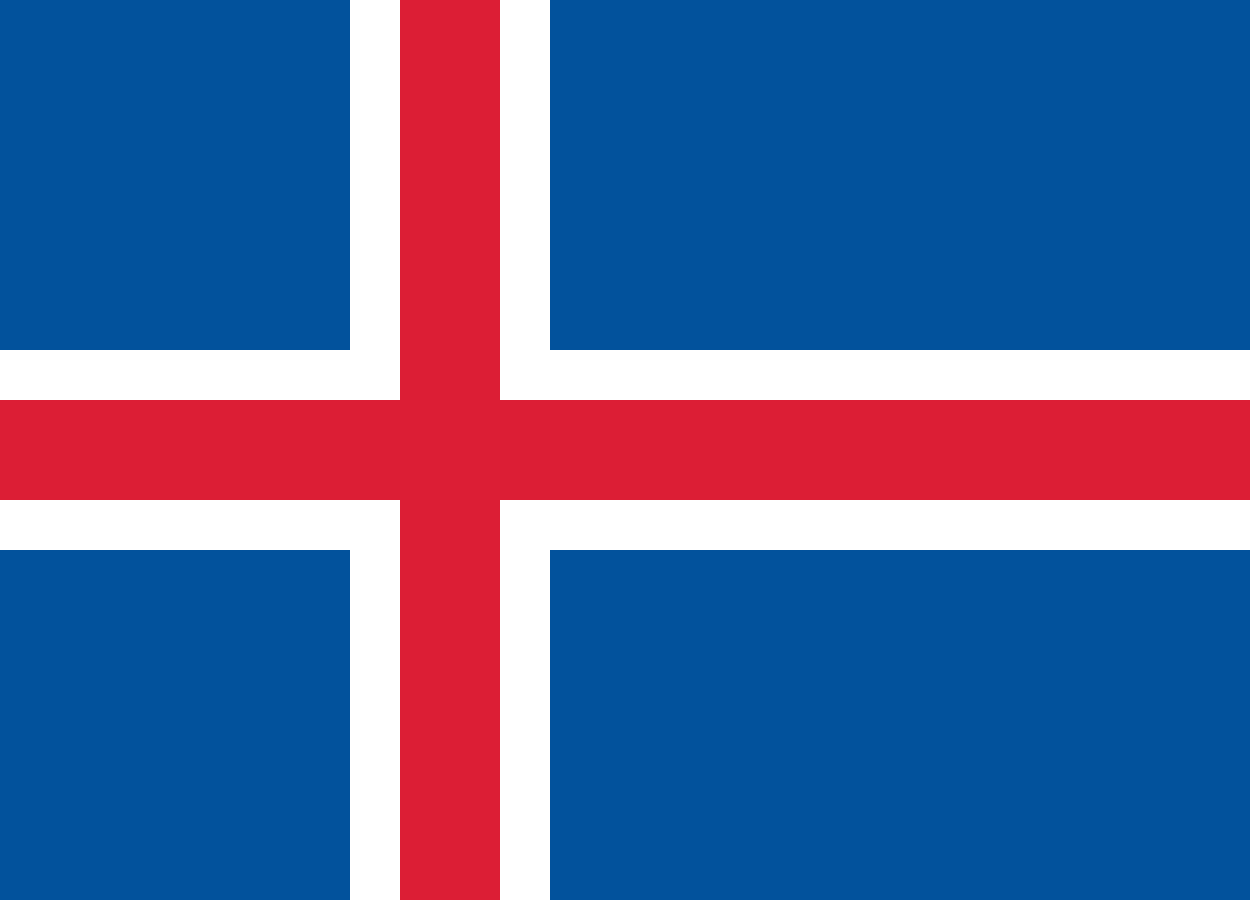
The flag of Iceland is defined in Law No. 34/1944, adopted on 17 June 1944, the day Iceland became a republic. The law, entitled The Law of the National Flag of Icelanders and the State Arms, describes the flag as follows:The civil national flag of Icelanders is sky-blue with a snow-white cross and a fiery-red cross inside the white cross. The arms of the crosses extend to the edges of the flag and their width is 2⁄9, and the red cross 1⁄9 of the width of the flag. The blue sections are rectangles: the hoist sections are equilateral, and the outer sections are the same width as them but twice as long. The ratio between the width and length of the flag is 18:25.
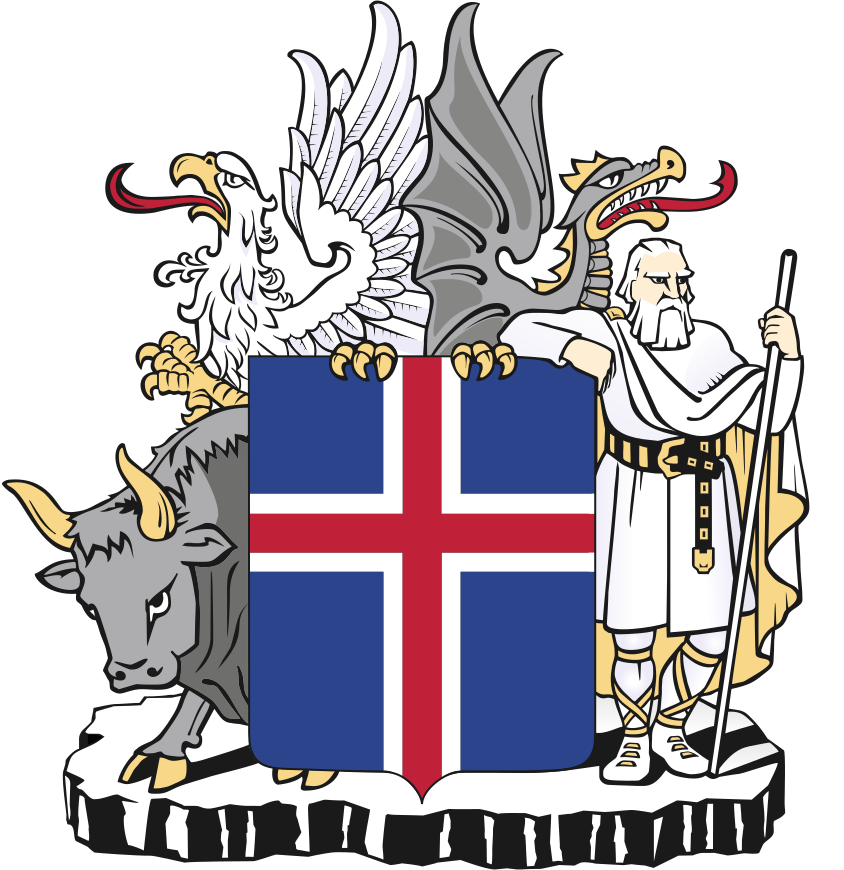
The coat of arms of Iceland displays a silver-edged, red cross on blue shield, alluding to the design of the flag of Iceland. It is the only national arms to feature four supporters: the four protectors of Iceland (landvættir) as described in Heimskringla, standing on a block of columnar basalt. The bull (Griðungur) is the protector of northwestern Iceland, the eagle or griffin (Gammur) protects northeastern Iceland, the dragon (Dreki) protects the southeastern part, and the rock-giant (Bergrisi) is the protector of southwestern Iceland. Great respect was given to these creatures of Iceland, so much that there was a law during the time of the Vikings that no ship should bear grimacing symbols when approaching Iceland. This was so the protectors would not be provoked unnecessarily.
Beyond the national coat of arms, Iceland is divided into regions and provinces, each carrying its own heraldic identity. Click on Iceland on the interactive map to explore its administrative subdivisions and discover the coats of arms of each region, province, and territory.