Country
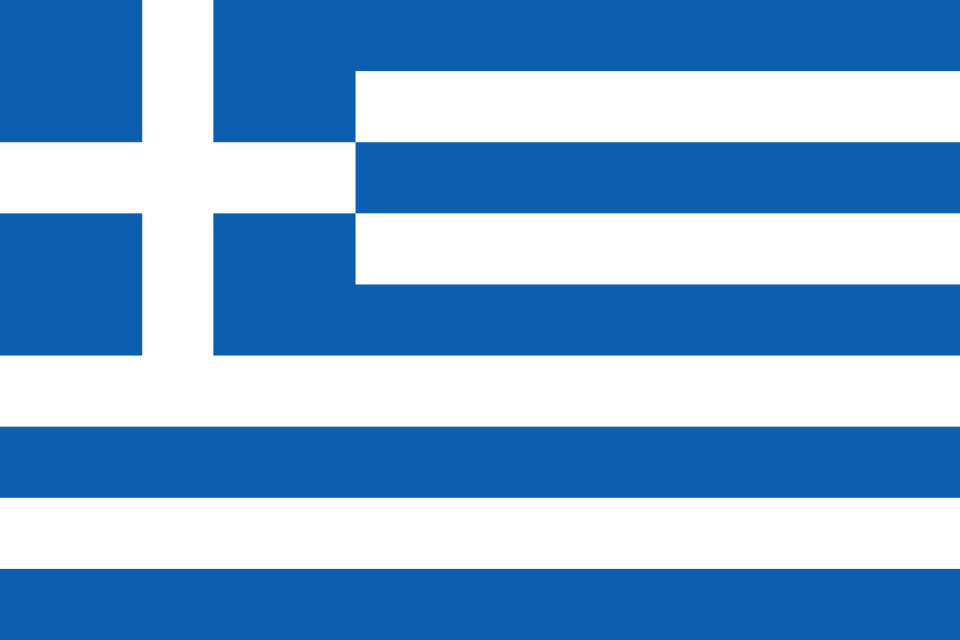
The national flag of Greece, popularly referred to as the Blue-and-White or the Cyan-and-White, is officially recognised by Greece as one of its national symbols and has 5 equal horizontal stripes of blue alternating with white. There is a blue canton in the upper hoist-side corner bearing a white cross; the cross symbolises Eastern Orthodox Christianity. The blazon of the flag is azure, four bars argent; on a canton of the field a Greek cross throughout of the second. The shade of blue used in the flag has varied throughout its history, from light blue to dark blue, the latter being increasingly used since the late 1960s. It was officially adopted by the First National Assembly at Epidaurus on 13 January 1822.
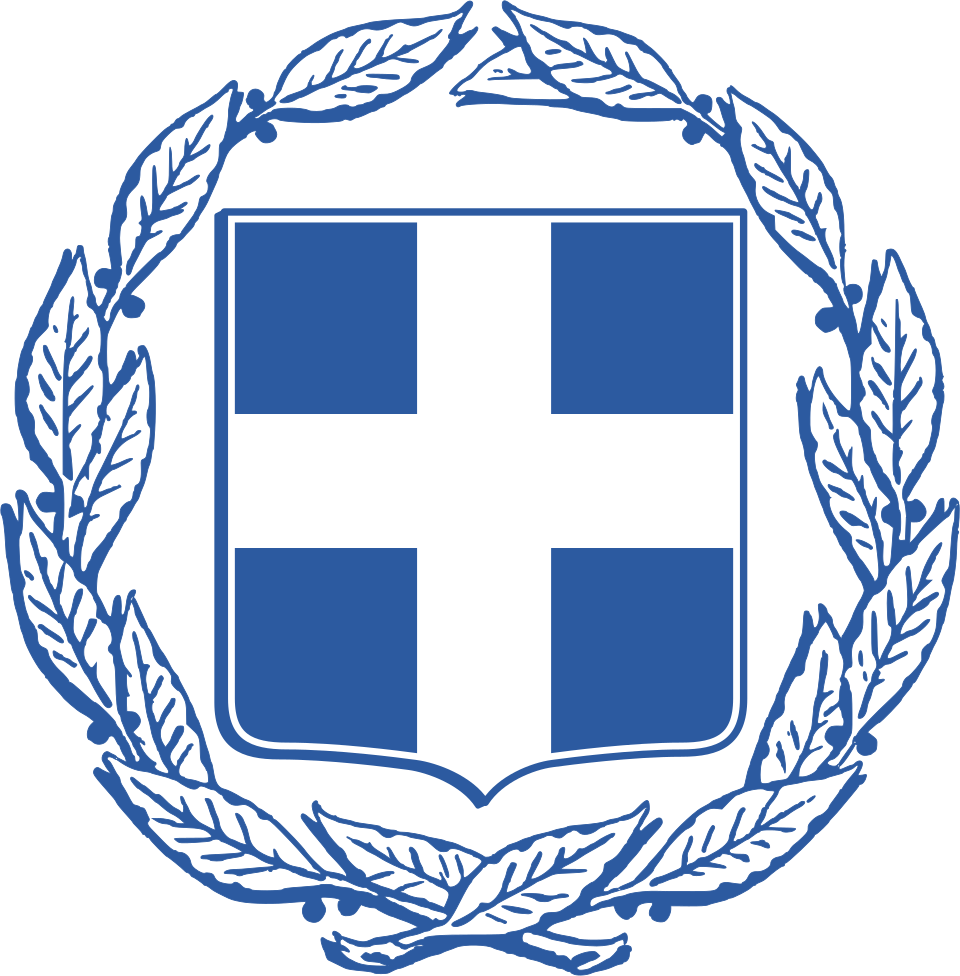
The coat of arms of Greece comprises a white Greek cross on a blue escutcheon, surrounded by two laurel branches. It has been in use in its current form since 1975. Prior to the adoption of the current coat of arms, Greece used a number of different designs, some of which were not heraldic; the first heraldic design was introduced in 1832 and its main element, the blue shield with the white cross, has been the base for all other national coats of arms since then. The design is a heraldic representation of the Greek national flag adopted in 1822, which featured a white cross on a blue field.
Beyond the national coat of arms, Greece is divided into regions and provinces, each carrying its own heraldic identity. Click on Greece on the interactive map to explore its administrative subdivisions and discover the coats of arms of each region, province, and territory.