Country
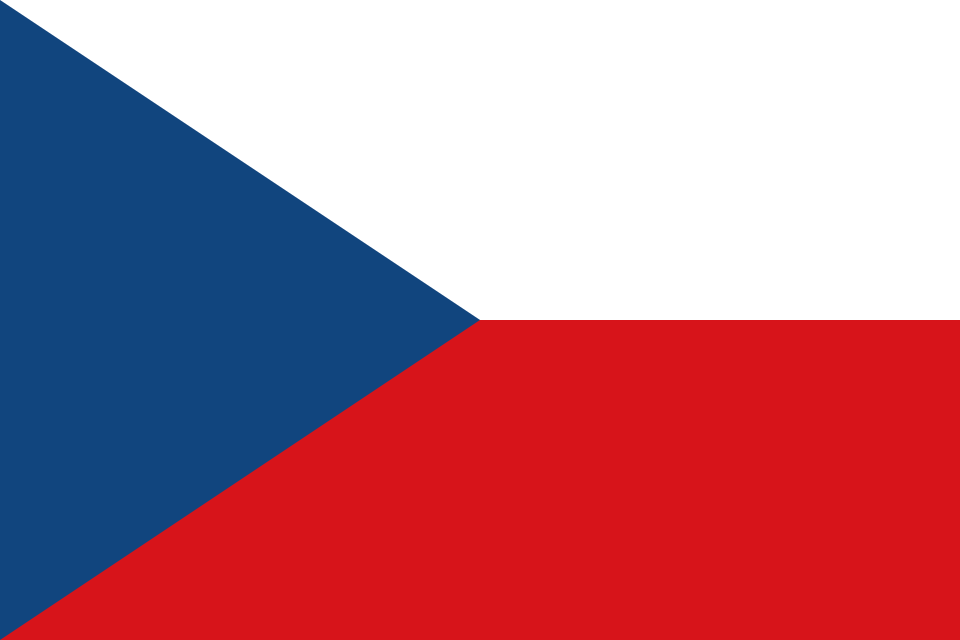
The national flag of the Czech Republic is the same as the flag of the former Czechoslovakia. Upon the dissolution of Czechoslovakia in December 1992, the Czech Republic kept the Czechoslovak flag while Slovakia adopted its own flag. The first flag of Czechoslovakia was based on the flag of Bohemia and was white over red. This was almost identical to the flag of Poland officially adopted in 1919, so a blue triangle was added at the hoist in 1920. The flag was banned by the Nazis in 1939 as they established a government nominally in control of Bohemia and Moravia, and a horizontal tricolour of white, red, and blue was used for the duration of the war. The 1920–1939 flag was restored in 1945. The flag was one of the only three flags of a socialist country in Europe without its coat of arms placed on center, when it was still part of Czechoslovakia at that time.
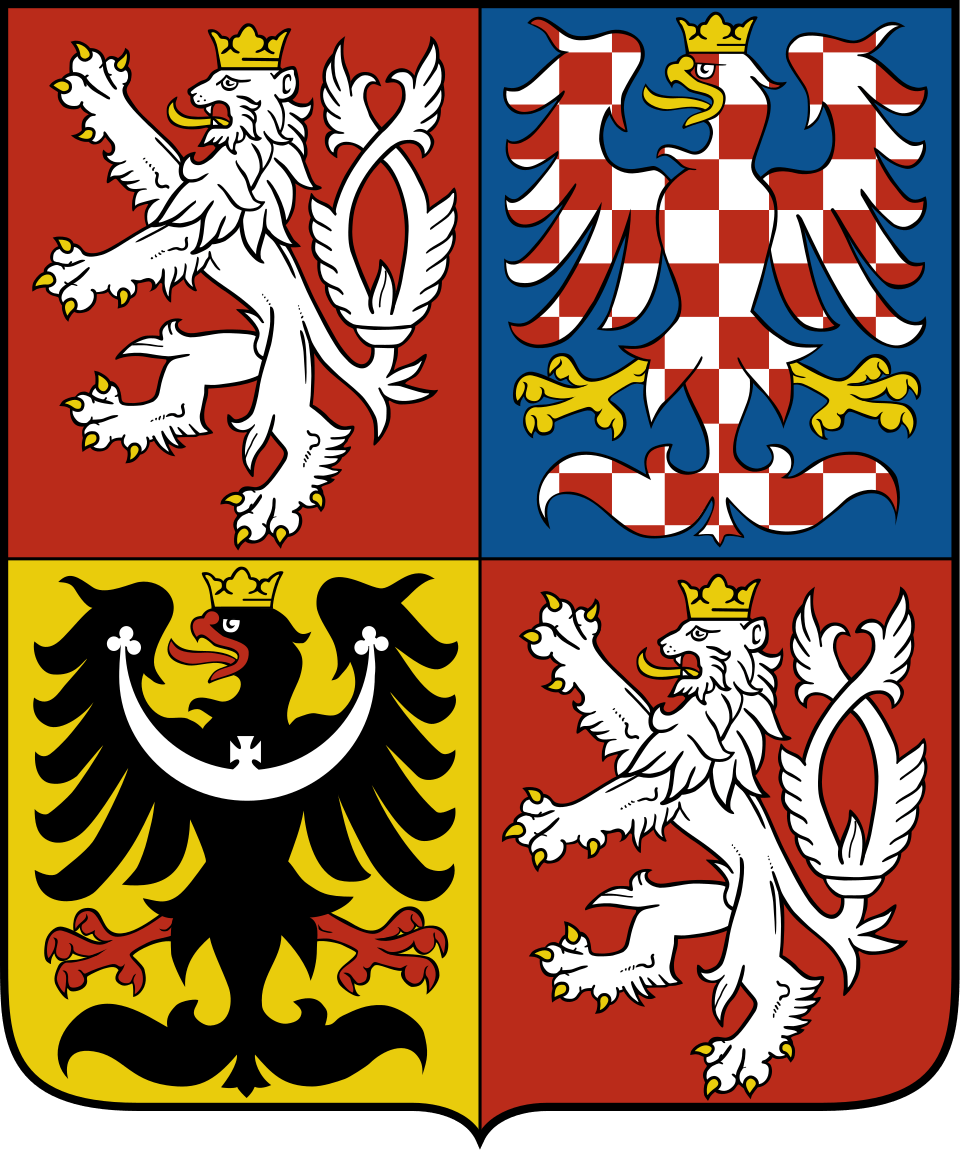
The coat of arms of the Czech Republic is divided into two principal variants. The greater coat of arms has quarters representing the Czech lands, the three historical regions which make up the nation. The lesser coat of arms displays a silver double-tailed lion on a red shield. The current coats of arms, which was adopted in 1992, were designed by Czech heraldist Jiří Louda.
Beyond the national coat of arms, Czech Republic is divided into regions and provinces, each carrying its own heraldic identity. Click on Czech Republic on the interactive map to explore its administrative subdivisions and discover the coats of arms of each region, province, and territory.